
University Department of Psychology
Magic of Statistics in Psychology Research’ Guest Lecture by Dr. P. H. Lodhi
Date: 13th February, 2025
Time: 1:00- 3:00pm
601, 6th Floor, Patkar Hall Building
SNDT Women’s University, Churchgate
The Department of Psychology at SNDT Women’s University, Churchgate, organized a guest lecture titled “Magic of Statistics in Psychology Research,” delivered by Dr. P. H. Lodhi. The session began with Dr.. Nilesh Thakre, Head of Department of Psychology, introducing Dr. Lodhi, setting the stage for an engaging and informative discussion. The event was attended by MA Psychology Part-1 and Part-2 students and was moderated by Dr. Nilesh Thakre. There were a total of 120 students along with faculty members Ms. Chaitri Dave and Ms. Tasmiya Kazi.
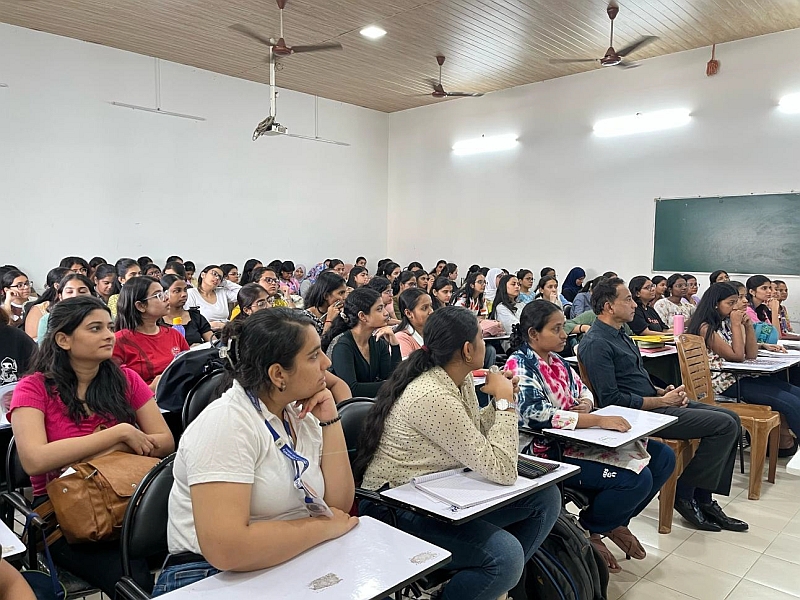
The lecture began by Dr. Lodhi who explains the importance of forming a good hypothesis in research. He used an interesting example about finding out if there is a correlation between hair length and height, stating that there is a negative correlation between the two, also highlighting the need to consider differences between groups, like gender, to ensure accurate results.
He then explained several research problems and how to utilize the appropriate research designs and statistical tests to investigate them. The first problem investigated the association between drug addiction and neuroticism using a two-group design and the t-test. Dr. Lodhi showed how the t-test reduces errors in findings and provided guidance on selecting the appropriate choice in SPSS. He also introduced Cohen’s d, which assesses the strength of a finding. The second problem investigated how noise impacts mental activities using a Randomized Two-Group Design. He employed a Randomized Three-Group Design (One-Way ANOVA) for the third challenge, which required comparing more than two groups. Dr. Lodhi described the principles of ANOVA and how to use post hoc testing to identify group differences. He provided useful guidance on how to use SPSS for these tests and interpret the findings.
Dr. Lodhi also discussed the difficulties with personality tests, particularly the issue of people providing false information. He highlighted research on faking in personality tests as well as findings from a 2004 Ministry of Defense meeting which had held a conference on how this testing can be done. He spoke about the research published in 1993 about addiction. He explained a research study that tested how Motivation to Fake (Low vs. High) and Fear of Detection (Low vs. High) affect fake answers. The study used 120 participants (30 per group) and measured personality traits. The results showed that fear of detection only stops faking when people are highly motivated to fake, but it doesn’t work when motivation is low or normal.
He then moved on to more advanced statistical methods like Three-Way ANOVA to study how Gender affects the relationship between Job Status. He explained how to check for interactions between variables and showed how the effects were different for males and females. He suggested doing separate analyses for each gender and showed graphs and a summary table of ANOVA to explain the significance effect of job status tables to explain the findings. He stated that the difference is less for females as compared to males. He also mentioned the importance of conceptually important statements after analysis.
Dr. Lodhi provided practical SPSS advice like he mentioned that post hoc commands are different commands on SPSS. He advised students to avoid complex 2×2 ANOVA designs. He advised students to study gradually and seek assistance from seniors to improve their skills.
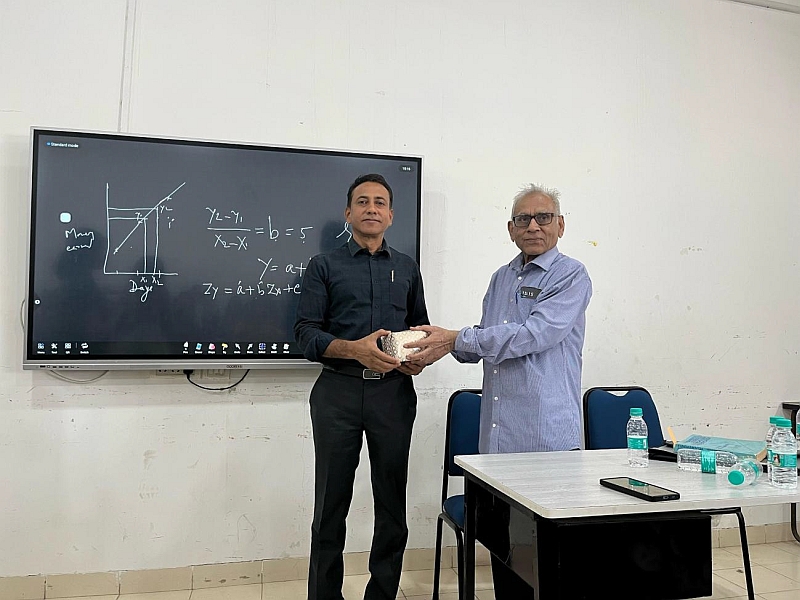
Dr. Lodhi also discussed Regression Analysis, explaining its history from Galton and Pearson (1885). He cleared up the misunderstanding that correlation means one thing causes another. Then he proceeded to explain the slope through formulas and graphs. He explained how bivariate linear regression works and how to understand standardized and unstandardized regression coefficients. To explain this he stated that when X changes in one unit, how much change in Y unit is an Unstandardised regression.
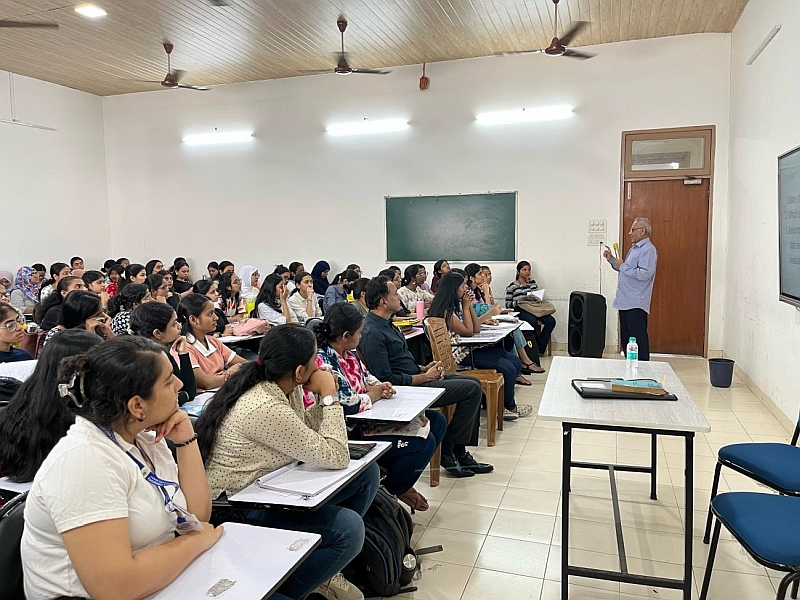
The discussion concluded with the student representative thanking Dr. Lodhi for his insightful lecture. On behalf of the Department of Psychology, Dr. Nilesh Thakre, Head of Department, Psychology offered a token of gratitude to Dr. P. H. Lodhi, thanking him for his contribution to the students’ learning experience. The lecture was highly informative and motivated students to apply statistics effectively in their future psychological research ventures.
Dr. Nilesh Thakre
Professor and Head
Dept. of Psychology, Churchgate