Student Interaction on The Values and Lifestyles of Native and Immigrant populations in Europe
Conducted on May 24th, 2023
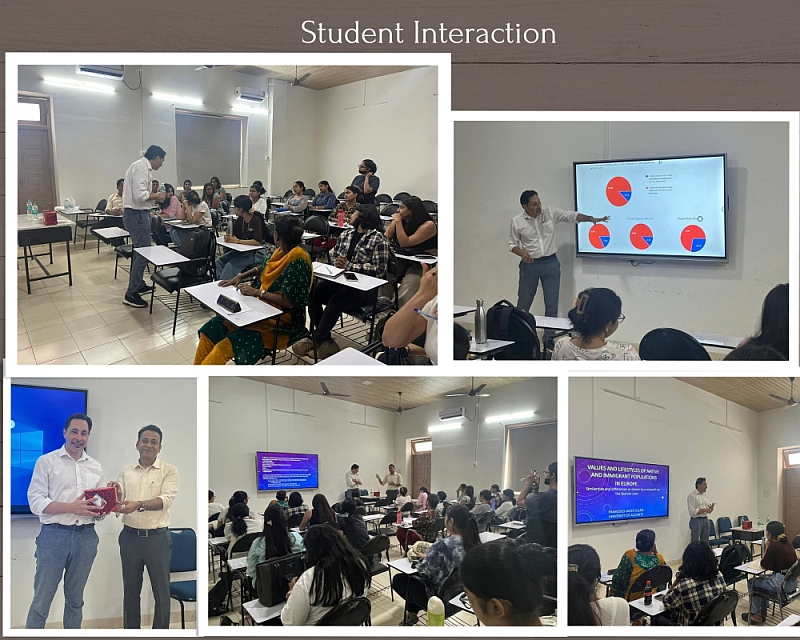
The Department of Psychology, SNDT Women’s University organized a student interaction on 24th May, 2023 which focused on exploring “The Values and Lifestyles of Native and Immigrant Populations in Europe.” The session featured a distinguished guest speaker, Dr. Francisco Javier, an Associate Professor from the University of Alicante (Spain), who shared his expertise on culture and lifestyle in the Spanish population. Dr. Nilesh Thakre, the Head of the Department of Psychology, SNDT Women’s University, initiated the session by introducing Dr. Francisco Javier and expressing gratitude for his presence.
Dr. Javier began his presentation by providing an overview of the research he conducted on the impact of globalization and industrialization on culture and lifestyle in the Spanish population. He highlighted the interconnectedness of these factors and their influence on the values and traditions of the society. He briefed the students with a few factors that inspired his research, like the question “Which particular ethnic group do you think should be given preference in order to migrate and settle down in Spain?” , the heavily militarized borders in Spain and El Ejido racial riots that took place in 2000.
The speaker elaborated on the context of the study and discussed the ethnic minorities present in the Spanish population. The sample consisted of University students from 16-22 years and focused on three particular groups: Spanish Gypsies, Latin Americans, and Maghrebian Muslim. Dr. Javier emphasized the importance of understanding the experiences and perspectives of these ethnic minorities within the larger cultural context.
Dr. Javier presented the findings of his research, shedding light on various aspects of the beliefs and practices of the ethnic minorities in Spain. He discussed various topics such as the conflict between tradition and technology, the identity of the minorities, the obedience to parents as well as the adherence to the capitalist mindset, political ideologies and social relationships. The study revealed intriguing insights into the complexities and nuances of these cultural dimensions.
The speaker emphasized the ethnic similarities that exist across these cultural dimensions, indicating that certain values and practices are shared among different ethnic groups in Spain. However, he also acknowledged that these differences were less likely to fade away in the future, as they are deeply rooted in the identities and histories of these communities. The potential implications of these findings were thought-provoking for both the academic and social realms.
Following the presentation, the session transitioned into an interactive discussion format. Attendees actively participated by raising questions and seeking clarification on various aspects of the research and its implications. Some of the questions raised included inquiries about the abolishment of virginity tests, uncertainties regarding the future of the minority groups, and the broader implications of the study. Dr. Javier responded to each question with insight, addressing the concerns of the attendees. The interactive discussion allowed for a deeper exploration of the research findings and fostered a stimulating exchange of ideas and perspectives among the participants.
In conclusion, the interactive session on “The Values and Lifestyles of Native and Immigrant Population in Europe” proved to be an enriching and engaging event. Dr. Francisco Javier’s presentation on the impact of globalization and industrialization on the Spanish population provided valuable insights into the cultural dynamics at play.
The Department of Psychology at SNDT Women’s University, Churchgate extended its gratitude to Dr. Francisco Javier for sharing his research and expertise. Special thanks were also expressed to Dr. Nilesh Thakre and the faculty members for their contributions and for organizing the interactive session. Such events contribute significantly to the academic growth and cross-cultural understanding of students in the field of psychology.