
Psychological Effects of Exercise
21st March, 2023
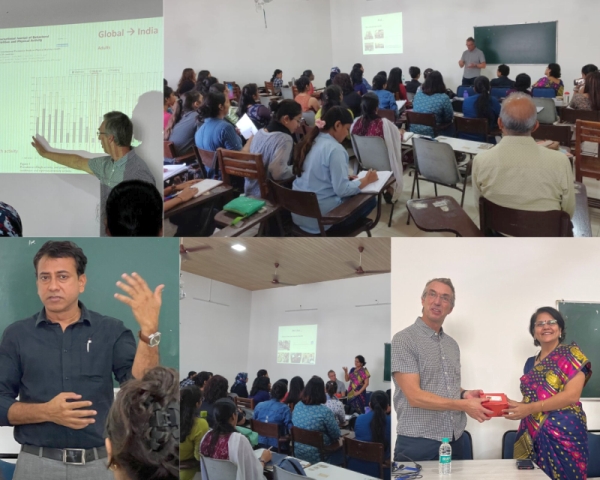
The Department of Psychology organized a guest lecture with Dr. Peter Kremer, Honorary Fellow from Deakin University, Australia. On the topic ‘Psychological Effects of Exercise’. Dr. Kramer specialized in counseling, sports and exercise psychology in his university years. He now teaches, conducts research, and supervises postgraduate students at Deakin University. He has also worked with the Department of Population Studies owing to his expertise in statistics at Melbourne University. Hence, one of the most prominent sports psychologists and researchers in Australia.
Ms. Divya Pillai began the session by giving a brief introduction of the session following which she asked Dr. Nilesh Thakre, Head of P.G. Department of Psychology, to address the audience. After being introduced, Dr. Kremer began his lecture during which he redefined “Can Exercise Prevent and Assist in the Treatment of Mental Health Issues and Promote Mental Wellbeing?” He proceeded to answer this question by systematically breaking down and explaining the different kinds of research done on the subject and their findings. He began by defining the broad terminology used in the field like physical activity, exercise, and sport and the differences between them. He then explained the statistics related to levels of physical activity and mental activity in India, Australia, and globally. He also briefed the audience about a health survey done by the Australian Government to understand psychological distress (anxiety and depression) on general population health.
He then spoke about how exercise can be used as a preventive measure for depression and anxiety. He then elaborated on a study which tried to examine the risk of depression for people who are highly physically active, moderately active, and have low activity. The results showed as high as an 80% increase in risk for depression for people who had low levels of activity.
Proceeding to explain exercise as a treatment modality for patients with depression and anxiety. The study had three comparable groups of patients with diagnosed depression studies over a period of six months. The results found that exercise created a similar effect as compared to antidepressants in the groups and that the effect was maintained over the period of six months in the follow up. The patients who exercised as a treatment had a lower relapse rate and used less medication.
He elaborated on some meta-analyses on the subject that found an enormous effect size of a Cohen’s d of 1.42 in favour of exercise as an alternative treatment for depression, anxiety, and mental health in general. Dr. Kremer then explained how these principles could be applied in practical situations such as counseling. On this subject, he introduced the FIIT principles that advise counsellors on prescribing what kind, what amount, what intensity, and how frequent exercise could be prescribed to their clients. The FIIT principle recommends any aerobic exercise of low to moderate intensity 3 to 4 times a day for 30 to 40 minutes for depression. Here, he answered a question about application of this treatment for depressed patients and remarked that some amount of discipline is also required in using exercise for treatment of depression. In response to a question, he also emphasized finding out what type of activity each client enjoyed and prescribing that activity as it increased the chances that they would actually go through with it.
Dr. Kramer elaborated on effects of acute exercise which were that it increased positive mood and reduced negative moods and that as little as 5-10 minutes of exercise can create positive psychological changes, and that it created reduction in state anxiety after just 15 minutes. He explained that if an individual exercises for a minimum of 3 times a week, then, it increases the sleep duration, total sleep time, and decreases problems in sleeping.
He then concluded by explaining the association of diet and screen time with mental health. These lifestyle changes could cause an impact on an individual’s level of overall physical health as well. The Dean of Humanities, Dr. Medha Tapiawala also spoke a few words about application of these principles in the Indian context. The dignitaries were felicitated after which, a vote of thanks was given to our guests which concluded the session.